Across the sustainable agriculture and food systems field, investors, funders, and community-rooted enterprises are confronting a shared reality: single-tool funding approaches cannot solve interconnected challenges.
Before food reaches our plate, it moves through a complex web of market sectors, enterprises, and organizations. Grant funding can be transformative, but it can’t drive systems change alone. To create a ‘good food’ economy – one that values ecological farming, resilient supply chains, worker protections, community ownership, and equitable access – funders must work together to address the evolving capital needs for food system transformation. We need more regional food hubs, community-serving processing, worker cooperatives, and BIPOC land stewardship. But how do we unlock the capital resources needed to build a new food system?
Individual funding tools come with both opportunities and downsides, limiting their respective impact:
- Grants – When done right, non-extractive but limited to narrow definitions of charitable impact.
- Debt – Enables growth but is often risk-averse and inaccessible for community-led or early-stage innovations.
- Investment – Helpful for scaled infrastructure such as food hubs, mills, or grocery stores, but too often extractive and out of reach for many communities.
- Public finance – Scales community solutions but is also restrictive, politicised, and administratively burdensome.
Traditional finance conforms to misaligned regulations and status quo market dynamics, hamstringing innovation for regenerative and equitable agriculture and limiting opportunities for frontline entrepreneurs.
What has emerged as a solution is integrated capital.
Integrated capital: weaving together diverse and values-aligned capital tools such as grants, impact investments, debt and guarantees, equity investments, relationships and other non-financial resources that allow more funding to flow together toward systems change.
Integrated capital turns individual tools into a catalytic force, unlocking larger flows of public and private capital toward solutions for a sustainable food future.
For many in philanthropy, integrated capital approaches multiple the impact of grant dollars. As federal funding cuts continue to destabilize community-led food projects, the limitations of fragmented funding structures are becoming impossible to ignore. A business-as-usual approach to philanthropy is not sufficient for the complexity of crises – and the scale of opportunities for transformation.
Unlike conventional finance, philanthropy can elect to fund long-term, absorb early risk, support pre-development work, convene unlikely partners, and invest in the relational infrastructure markets routinely undervalue. Foundations are uniquely positioned to cultivate and coordinate the capital ecosystems that make systems-level transition possible. Capital coordination not only amplifies impact, it can alleviate the burden of capital stacking that often falls to already time and resource strapped non-profit leaders, small businesses, and social entrepreneurs.
Over the past year, SAFSF members and partners in the non-profit and social enterprise sectors have explored this shift in funding from multiple vantage points through:
- On-the-ground convening in Chicago;
- Platforming case studies on regenerative finance from North Dakota, the U.S. South, and California; and,
- A Community of Practice, including learning directly from practitioners leveraging complex capital stacks for transformative projects in North Carolina.
Taken together, these experiences elevate a transition that is underway: integrated capital is already happening and increasingly necessary to align capital with ecological, social, and community outcomes, from farm to fork and beyond.
Place-Based Systems Change Requires Capital That Moves Across Silos
At SAFSF’s Chicago On The Road convening, BIPOC and mission driven businesses at The Hatchery shared the capital journeys behind their mission to bring healthy, culturally relevant food to their communities.

In a candid conversation with entrepreneurs Chef Wanda Gilmer with Fatso Hard Kitchen, Swetha Shrivatsa and John Hammerstone with Sorghum Symphony, and Nikkita Randle with Twisted Eggroll, the message surfaced repeatedly: accessing capital is labor. Beyond securing dollars, entrepreneurs must navigate systems, relationships, language, and the complicated requirements for both private grants and government funding.
Business accelerator infrastructure plays a critical role in expanding the impact of social enterprises. “If you do not know what the resources are, you cannot seek them,” one entrepreneur shared, reflecting on the catalytic role that organizations like The Hatchery, Good Food Accelerator, and Allies for Community Business played in opening doors to funding and the knowledge needed to deploy it sustainably.
For Sorghum Symphony, a company committed to sourcing regenerative sorghum production in the Midwest, the challenge is the lengthy and costly requirements of research and development for new product development. The founder duo of Swetha Shrivatsa and John Hammerstone described the difficulty of finding flexible funding that allowed enough time and operational space to build an allergen-free product within food manufacturing facilities never designed for it. Community-rooted food innovation operates through iteration, relationship-building, cultural relevance, and long-term trust, not speed and clean metrics sought by traditional funders.
The conversation returned to a broader theme: capital compounds, and so do barriers. Entrepreneurs with existing networks, assets, and financial know-how are often positioned to access additional opportunity, while those without them shoulder extraordinary administrative and emotional labor to even enter the conversation.
This is where integrated capital emerged not just as blended finance, but as blended support through grants and loans, technical assistance, trusted referrals and connections, ecosystem coordination, and social capital. Again and again, participants emphasized that social capital often determines who can access financial capital in the first place.
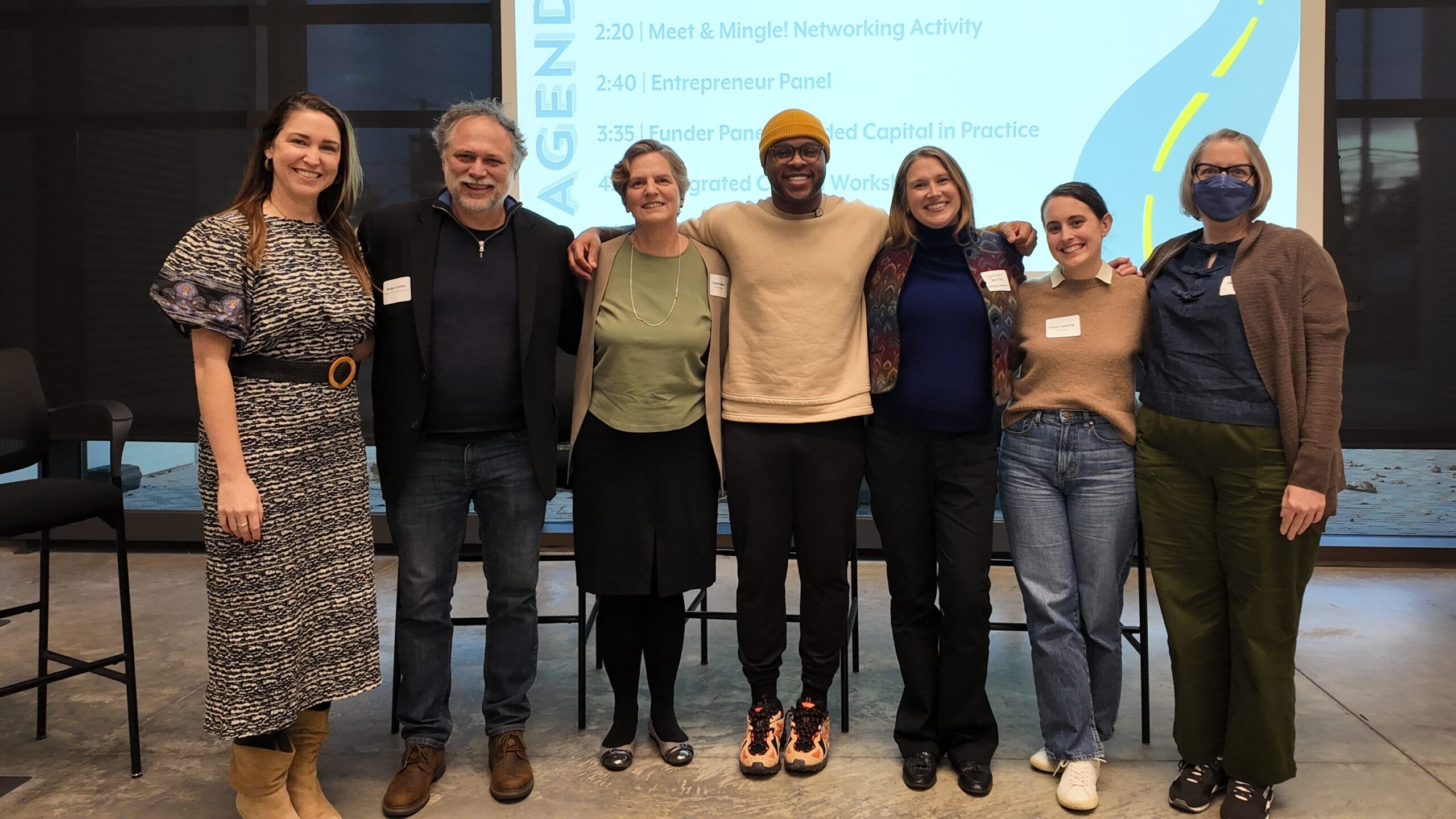
This philosophy carried forward into the funder discussion as well. Kinship Foundation (foundation), Chicago Food Policy Action Council (re-grantor), Proofing Station (charitable investment fund), and Chicago Region Food System Fund (community-led fund) reiterated that integrated capital is the combination of blended capital and social capital, and that it’s often easy to downplay the significance of connections and resources often deployed over short coffee chats and downtime at conferences. Proofing Station described its approach to structuring bespoke financing terms based on an entrepreneur’s existing capital stack and sustainability, rather than pushing debt products that may ultimately constrain growth.
Coordination across funders, lenders, and technical assistance providers is equally important, with multiple partners each playing a distinct role in helping entrepreneurs become investment-ready, fundable, and ultimately resilient.
Regenerative Agriculture Exposing the Limits of Conventional Finance
A webinar hosted by Sustainable Agriculture and Food Systems Funders and Croatan Institute in May 2026 framed regenerative agriculture as a capital architecture problem, outlining the structural financing gaps inhibiting transition. Modeled by real-life case studies from Akiptan in North Dakota, Croatan Institute and Rural Beacon Initiative in North Carolina, and SAFSF member Foodshed Capital in California, integrated capital approaches are both a philosophy and an operating system.
The funders challenged others in the room to move beyond the usual “grants plus loans” framing and to deploy a coordinated ecosystem of tools such as recoverable grants, low-interest debt, guarantees, land acquisition financing, technical assistance, post-close accompaniment and follow-on resources, for true change and support.
While regenerative transition is already technically possible and culturally emergent, conventional finance still behaves as though ecological restoration, farmer viability, and long-term stewardship are irrational risks rather than investable public goods.
Regenerative agriculture is not undercapitalized in aggregate, it’s mis-capitalized, aligned with what SAFSF and partners are hearing across climate finance, community wealth-building, and energy transition investing. The challenge is not a lack of innovation among farmers and communities; the challenge is that most capital markets remain structurally misaligned with biological and community timelines.
Philanthropy’s role, speakers argued, is not merely catalytic in the narrow sense of “de-risking” private investment. In some cases, philanthropy may need to long-term occupy portions of the capital stack where conventional markets systematically fail, including land access, transition support, pre-development work, Indigenous land-back initiatives, and farmer technical assistance.
The discussion also surfaced a deeper philosophical shift underway: rethinking what counts as “risk.” Conventional finance often treats regenerative transition as speculative, while industrial agriculture, as it’s currently financed, is rational despite mounting ecological, climate, and public health instability. Integrated capital frameworks invert that logic by valuing resilience, soil health, community ownership, regional circulation, and long-term durability.

Community-Led Capital Stacks
Integrated Capital Community of Practice Learning Visit to North Carolina
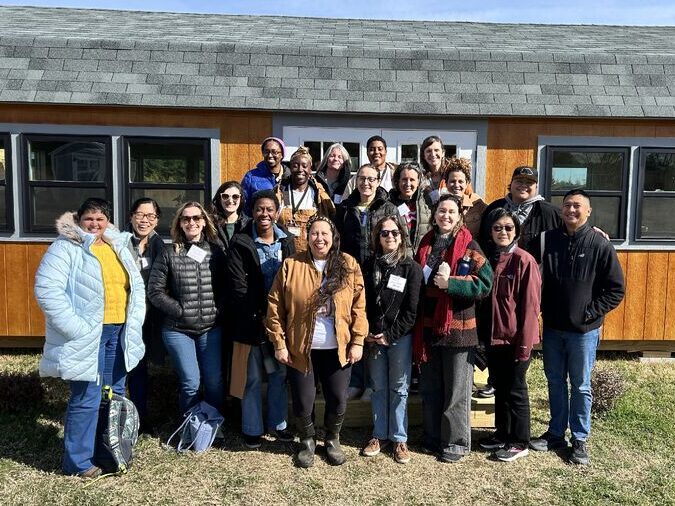
The SAFSF Integrated Capital Community of Practice moves this conversation from theory into implementation. Earlier this year, 14 funders gathered for an intimate learning experience in North Carolina to learn from enterprises like Seed2Shirt and Historic West End Partners, and initiatives like Sustainability Hub at Free Union Farm experimenting with integrated funding structures in practice. Participants encountered real enterprises navigating land access, infrastructure costs, farmer support, workforce development, and regional supply chain resilience in real time.
Historic West End Partners (HWEP) in Charlotte, North Carolina, with Founder and Executive Director Ms. J’Tanya Adams at the helm, is leading an historic mixed use development combining affordable housing with grocery retail access in an historic Black neighborhood battling gentrification and displacement. The 5 Points Development Project will provide affordable housing for displaced low-income residents to return to their neighborhood.The grocery store will be a community and worker owned cooperative, operated as the third location of the regional natural foods brand, Weaver Street Market, expanding much needed access for a neighborhood that has had no healthy food options for over 40 years.
The project relies on a blended public–private and philanthropic model. The capital stack features a $4.13 million short-term city land-acquisition loan, a $6 million anchor pledge from Knight Foundation, and additional backing from corporate and individual donors. The week that SAFSF visited with Ms. J’Tanya Adams, the Charlotte City Council awarded $6 million toward the 5 Points Project. Additional foundations and CDFIs like LISC have helped to grow the capital stack to bring to life a project that will stabilize and transform an entire neighborhood. For this project, Knight Foundation is more than a funder: the foundation has also played the role of building and coordinating different capital partners, providing direct support and introductions for HWEP’s leadership, and centering community leadership in discussions with new funding partners.
Integrated Capital is About Matching Tools to the Transition
Across the country, from Chicago to North Dakota and North Carolina, one conclusion became increasingly difficult to ignore: Complex systems transformation requires new funding approaches.
Integrated capital recognizes that grants and investment are not opposing strategies, that public and private funding each play distinct roles, and that community-rooted change often requires coordinated layers of support over long time horizons.
Across the food and agriculture landscape, practitioners are already building and testing integrated capital models that offer important lessons for philanthropy. SAFSF will continue to provide programming, peer learning, and field-building resources designed to help funders navigate this evolving landscape.
In partnership with seasoned practitioner Charity May of Sacred Futures, SAFSF is now enrolling for the second cohort of the Integrated Capital Community of Practice (IC CoP). The field of philanthropy is shifting quickly, and funding support for community-led solutions and systems change is urgent. The IC CoP offers a space to explore frameworks, tools, and real-world examples of how to remove barriers between grantmaking and investing, deploy capital in ways that widen who holds decision–making power and direct resources toward the communities managing the most risk in this transition. This seven-month learning journey is ideal for diverse capital partners seeking to unlock the full potential of their resources for just and sustainable food and agriculture systems.
Registration for our second cohort closes October 2nd.