
The SAFSF Forum travels to places that conferences and philanthropy often overlook and underfund. SAFSF has not hosted a Forum in the South for over 10 years. In 2024, we collaborated with the USDA Natural Resources Conservation Service (NRCS) to better coordinate philanthropic and federal resources for underserved producers and communities — a project that unexpectedly led us to a pilot in southwest Georgia. Though the winds shifted swiftly at USDA later that year and the pilot never launched, we couldn’t forget the power and resilience of the leaders we met there, or their vision for the future of food and agriculture. We knew it was time to gather in the South.
For people not from the region — like myself — the US South may evoke the most painful parts of our nation’s history: slavery, discrimination, and war. But for many Southerners in the long fight for social and racial justice, including my Georgia-born-and-raised husband, the South is a fulcrum for the future of the nation. At the memorial for his mentor, the late civil rights legend Reverend James M. Lawson, it was said that “there was the nation born in 1776 and the nation born in 1965.” This hit me powerfully: the country I was born into — with the promise of multiracial democracy — had only just begun to fulfill that promise through the victories of the Civil Rights Movement and the passage of the Voting Rights Act. Today, Georgia and other Southern states remain ground zero for the battle for voting rights and democracy; the recent gutting of the Voting Rights Act at the U.S. Supreme Court points toward a long road to reclaim power.
Our nation’s food and agriculture is deeply intertwined with what happens next in the South. Savannah was where General Sherman signed Special Order No. 15 — the promise of “40 acres and a mule” — to formerly enslaved people. Despite that initial – later rescinded- attempt at reparations, Black farmers have lost 90% of their farm land, a loss of 13 million acres worth $326 billion, since the beginning of the 20th century. That land loss intersects with structural discrimination, agricultural policy, corporate consolidation, climate crises, deforestation, the buildout of AI data centers, and the gutting of rural economies. These present day challenges are relevant to all of us.
The only way to meet these forces of power is with forces of power. Black leaders in the South have always known this, drawing on deep traditions of building power through liberatory organizing, cooperative economics, sovereignty and self-determination. As SAFSF member Shorlette Ammons, Co-Executive Director of Farm Aid, reminds us: “You can’t reduce us to a history. We also have a really, really badass presence that cannot be messed with.” The struggles and solutions coming out of the South map a path toward our “ancestral futures” — a just and sustainable food system for generations to come.
One of the most important things you can do before traveling to Savannah is to deepen your understanding of the land you’ll be standing on and the people who carry generations of ancestral knowledge of caring for it. We invite Forum attendees to move with intention — arriving with full presence, ready to receive the wisdom of leaders in the region.
We’re sharing resources we’ve collected along the way of planning for the Forum, as well as a special interview with Farm Aid’s Shorlette Ammons, a replay of the two-part webinar series on heirs’ property coordinated by the Center for Heirs Property, and links to the Black-led food, environmental, and justice organizations joining us at the Forum. It’s not an exhaustive list, but it’s a reminder to begin again. Let us not waste this moment — but embrace the opportunity to go deeper in our learning and in our connections with one another.
Be well and be brave,
SAFSF Podcast Launch:
Interview with Shorlette Ammons of FarmAid
SAFSF has launched a podcast! The Funding Field from Sustainable Agriculture and Food Systems Funders (SAFSF) offers insightful conversations with diverse capital partners working to fund and build a resilient, just, and democratic future of food and agriculture. Each episode features candid conversations with leaders in philanthropy, impact investment, and social change who are mobilizing capital, shifting power, and changing systems from the ground up. From on-the-ground insights by frontline communities to trendlines in impact capital and funding food and agriculture, The Funding Field is an essential resource for those seeking greater impact in supporting transformative food systems change.
Our first episode is a MUST listen.
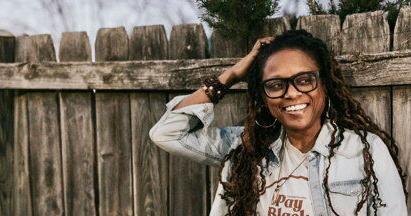
We sat down with Shorlette Ammons, Co-Executive Director and Program Director of FarmAid, to learn about her journey growing up in rural North Carolina to now leading the nation’s largest musician-led fundraiser to support family farms. Shorlette Ammons brings a rare combination of lived experience and visionary leadership to her work at the intersection of food, music, and movement. Raised in Beautancus, North Carolina, as the granddaughter of hog farmers and the child of farmworkers, Shorlette traces a direct line from those tobacco fields and pickle plant packing lines to her understanding of how systems are designed to pit marginalized communities against one another — and how to build something different.
In conversation with SAFSF’s Clare Fox, Shorlette reflects on Farm Aid’s evolution from iconic telethon concert to year-round advocacy and grantmaking organization, shares a grounded perspective on what philanthropy often misses in its approach to rural and BIPOC communities, and shares invaluable insights for how to get the most out of our time together at the SAFSF Forum in the South.
Build Your Knowledge
WATCH:
Unlocking Land, Equity, and Climate Opportunity: Lessons from the Mobile Basin Heirs’ Property Initiative
This two-part recorded webinar series featuring founding organizations and partners of the Mobile Basin Heirs’ Property Initiative (MBHPi), is essential viewing for anyone coming to Savannah.
Heirs’ property — land passed down through generations without a formal will or clear title — affects family-owned land across the U.S. South in significant ways, and its consequences fall hardest on Black landowners and communities. The ripple effects are sweeping: loss of working lands and forests, disrupted biodiversity and carbon sequestration, and the erosion of cultural and economic continuity for families who have stewarded this land for generations.
Understanding this context matters. The land tenure issues at the heart of this series connect directly to the food systems, farm viability, and community wealth conversations we’ll be having together.
Organizations featured in the series include the Center for Heirs’ Property (CHP), Mississippi Center for Justice (MCJ), World Wildlife Fund (WWF), the Federation of Southern Cooperatives, Limited Resources Landowner Education Assistance Network, Legal Services Alabama, and the Winston County Self Help Cooperative.
Before Savannah:
Pre-Read and Watch List
Arrive with greater context by exploring this (non exhaustive) list of articles, books, and films curated by staff, Host Committee, and partners, and featuring SAFSF Forum speakers.
- The Courage to Hope: How I Stood Up to the Politics of Fear by Dr. Shirley Miller Sherrod
- Obama Oral History project interview with Dr. Shirley Miller Sherrod
- Afterlives of the Plantation: Plotting Agrarian Futures in the Global Black South by Dr. Jarvis C. McInnis
- Freedom Farmers: Agricultural Resistance and the Black Freedom Movement (Justice, Power, and Politics) by Monica. M. White
- Turtle Island: Foods and Traditions of the Indigenous Peoples of North America by Sean Sherman
- Harvest of Shame (1960) – this 1960 CBS television documentary by journalist Edward R. Murrow provides background on living and working conditions for migrant agricultural workers in the United States, including rural Georgia.
- High on the Hog: A Culinary Journey From Africa to America by Dr. Jessica B. Harris
- High on the Hog Series on Netflix, hosted by Stephen Satterfield and based on the book by Dr. Jessica B. Harris
- The Truth Behind ’40 Acres and a Mule By Henry Louis Gates, Jr.
- The life-giving, death-dealing power of corn– Maize fed ancient civilisations, then wiped out 100,000 American Southerners. What went wrong? – Published by The Economist
The Black-Led Food, Environmental, and Justice Organizations From the South At The SAFSF Forum
- AgriUnity
- Alabama State Association of Cooperatives
- Berry Family Farms
- Black Farmers Network
- Black Fiber & Textile Network
- The Center for Heirs’ Property (CHP)
- The Common Market
- Communities in Partnership
- The City of Atlanta and City of Savannah, Mayor’s Office
- Deer Creek Farm
- East Alabama Black Belt Farmer’s Cooperative
- EnerWealth Solutions
- Farm Aid
- Freedman Heirs Foundation
- Gullah/Geechee Fishing Association
- The Guild
- Liberating Investment in the Food and Farm Ecosystem (LIFE)
- Land Loss Protection Project
- McIntosh S.E.E.D
- Men and Women United for Youth and Families Inc.
- Mississippi Association of Cooperatives (MAC)
- Mississippi Center for Cultural Production (Sipp Culture)
- Mystic Roots Foundation
- National Black Food & Justice Alliance (NBFJA)
- National Black Growers Council
- Persimmon Collective
- Rise and Root Farm (Karen Washington)
- Rollen’s Raw Grains
- Seed Time Harvest Farms
- Southern Rural Black Women’s Initiative For Economic and Social Justice (SRBWI)
- Southeastern African-American Farmers Organic Network (SAAFON)
- Southern Black Farmers Community Led Foundation (SBFCLF)
- Southwest Georgia Project for Community Education
- Virgin Islands Good Food Coalition
