
Consolidation & Concentration
Let’s dig into concentration and consolidation: farmland consolidation and industry concentration of livestock and agribusiness.

FAST FACTS (*at time of filming):
- The top four beef processors control 85% of the market.
- The top four pork processors control 2/3rds (67%) of the market.
Concentration plays out when a sector becomes so consolidated that there are only a few suppliers or buyers of a product. The food and agriculture system is concentrated – blatantly apparent in the meat processing sector and throughout the supply chain, made visible during the COVID-19 pandemic where packers saw historic profit margins. Workers in highly concentrated sectors have little to no power to demand equitable treatment, proper working conditions, and fair wages. The power has been taken from the people and transferred to corporations – who in turn, profit.

Felt in communities across America, agricultural concentration and consolidation has a notable impact in rural America. The hollowing out of rural America by these corporations is extraction of wealth.
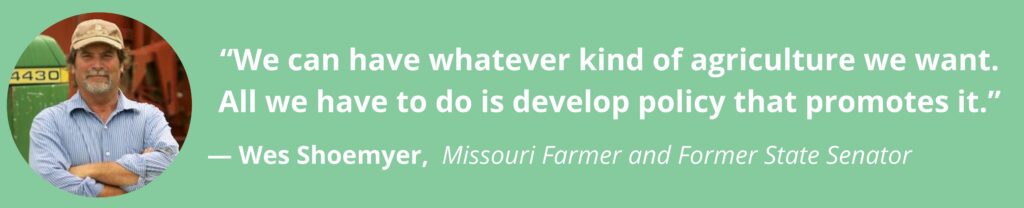
“They extract our natural resources, they extract our labor, they extract the wealth from the farm, from the labor, and put that money somewhere else, and it’s not reinvested back in the rural areas,” noted Wes Shoemyer, Owner of Shoemyer Family Farms.

State and federal agriculture policies have historically favored large farms and continue to do so. Large crop farms are getting larger, small crop farms are getting smaller, and many mid-size farms are disappearing. As Dr. TJ Cooper, a farmer in Fulton, Missouri candidly shared in the film: “One statistic is going to be out: Me.”
“The industry has a strong narrative that the system that we have now is kind of the natural outcome of these kind of mythic market forces. Things just tend towards larger economies of scale, and this is the most efficient way to produce and distribute things. But that’s not the case. Governments set rules for markets. Right now, the rules of the market are skewed towards concentrated capital and large consolidated businesses” – Claire Kelloway, Open Markets Institute

Economic pressure, extreme weather events, and systemic discrimination are forcing out farmers like Dr. TJ Cooper and Webster Davis, commodity growers in rural central Missouri (pictured above with film narrator Masika Henson). The unique pressures rural communities face – further exacerbated by loss of industries in healthcare, retail, education, and other sectors – make small and mid-size farms easy targets, more vulnerable to acquisition and closure.
Enter the current landscape: fewer farmers, fewer beginning or next generation farms, and fewer opportunities for farmers of color.
According to Ferd Hoefner, a food policy expert, roughly half of America’s food production is done by about 4 percent of farm businesses. Corporations artificially drive up the price of land and dictate who does and does not have timely access to the marketplace, effectively shutting out family farmers in communities nationwide. To continue the conversations had in the film, learn more from Open Markets Institute in the recording below.
Discussion Questions
- Whether you live in an urban or rural place, what do you know about who owns the land in your community?
- Who controls how and where you access food?
- How does the use of land in your community affect your daily life, your health, and what you eat?
- What does it mean for our food system—and our communities—when just a few big companies control most of what we eat, and who benefits or loses because of it?